Progress, Jim Echard believes, comes from knowing when the pieces are ready.
At dawn in central Pennsylvania, the ridge lines around the area hold a steadiness that predates modern industry. Change arrives slowly here, shaped by work, weather, and patience. Jim grew up in Lewistown, watching his father leave each morning for Standard Steel. He learned early that engineering was tangible and consequential. It showed up in infrastructure, in livelihoods, and in whether communities endured.

That grounding never left him. Now President of BAI Group, nearly forty years after the firm was founded, Jim is guiding it into a new chapter built on the same sense of responsibility and long-term thinking.
A short drive from his roots, State College is also home to Penn State, where engineering and artificial intelligence are increasingly intertwined. That proximity places BAI near ideas that are reshaping how infrastructure, data, and computation come together as practical tools meant to operate in real landscapes and under real constraints.
Those tools, however, depend on something more fundamental: power.
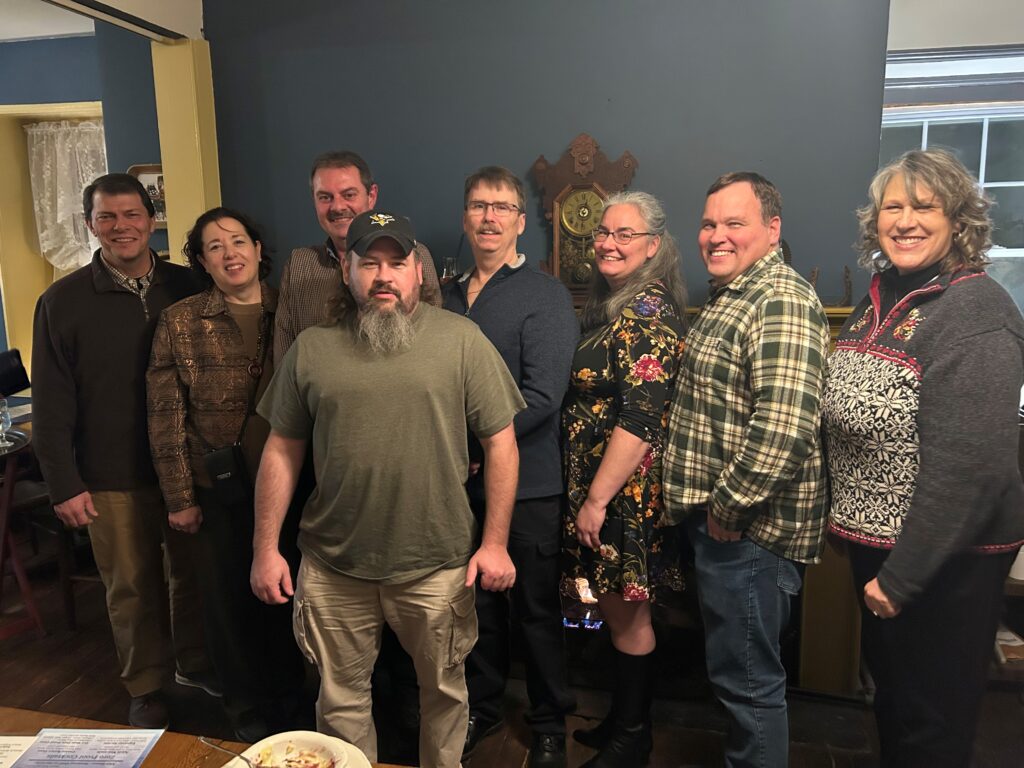
From left to right: Jim Echard, Janis Pusateri, Ron McConnell, Steve Harshbarger, Sarah Stong, Pat Wozinski, Karen Finlan, and Evan Teeters — with John Darmiento cheering from afar.
Jim approaches engineering the way an explorer studies unfamiliar ground. He watches patterns. He listens for early signals. Energy demand is one of those signals. Data centers are expanding. Electrification is accelerating. Artificial intelligence is growing.
“I’m not sure the average person understands the potential problems looming from the demand for energy. The front of the storm is already here.”
BAI has worked in energy development for more than 25 years. Under Jim’s leadership, the firm gradually expanded beyond traditional consulting into development and construction. Solar became a natural extension of BAI’s environmental and engineering foundation.
Projects ranged from modest municipal systems to utility-scale arrays exceeding 150 megawatts. Each one added another layer of experience. Each one reinforced the importance of sound science, careful permitting, and engineering judgment that holds up over time.
That continuity matters. Many of the people who helped build this work have been part of BAI for decades. Their knowledge is institutional, practical, and deeply grounded in the physical behavior of systems. It is the kind of experience that cannot be rushed.
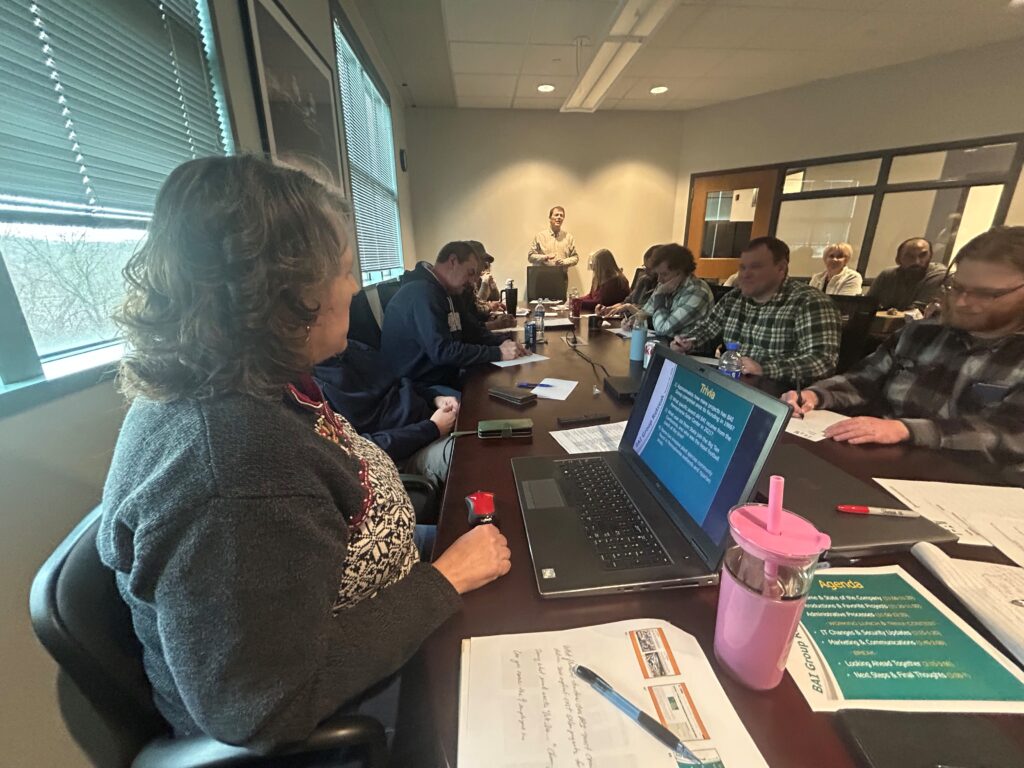
As the work evolved, so did the needs. Energy generation alone was no longer enough. Reliability and resilience began to matter just as much as output.
“We saw that battery energy storage systems were becoming part of the energy infrastructure, not an add-on.”
BAI moved into this market deliberately. Several projects are now in development. At the same time, Jim and the team continue to evaluate other emerging energy systems, weighing what is viable against what is merely new.
As energy systems grew more complex, another reality became clear. Data was everywhere.
Landfills generate decades of operational history. Groundwater monitoring captures slow, subtle change. Stormwater systems, gas collection networks, settlement surveys, and emissions tracking all contribute to a growing archive. Much of it has traditionally been reviewed after the fact, limited by time and staffing rather than importance.
Around this time, Jim also began to broaden the range of experience inside the firm. Alongside long-tenured engineers grounded in fieldwork, renewables, and science, new team members arrived with different vantage points. Some had worked internationally. Others brought experience with large-scale global systems, emerging technologies, and data-driven problem solving. The mix mattered.
It sharpened how questions were asked. Jim began to see artificial intelligence not as a replacement for expertise, but as a way to listen more closely to what the data was already saying.
“We’ve been collecting data for years, but our ability to analyze it has always been limited. AI helps us see new links of cause and effect.”
Jim has also encouraged ideas to surface from within the firm. Alongside time spent with AI startups, academic programs, and emerging institutions focused on applied tools and engineering curriculum, he has created space for internal curiosity and experimentation. Innovation is treated as something that grows through conversation, shared problem-solving, and hands-on experience.
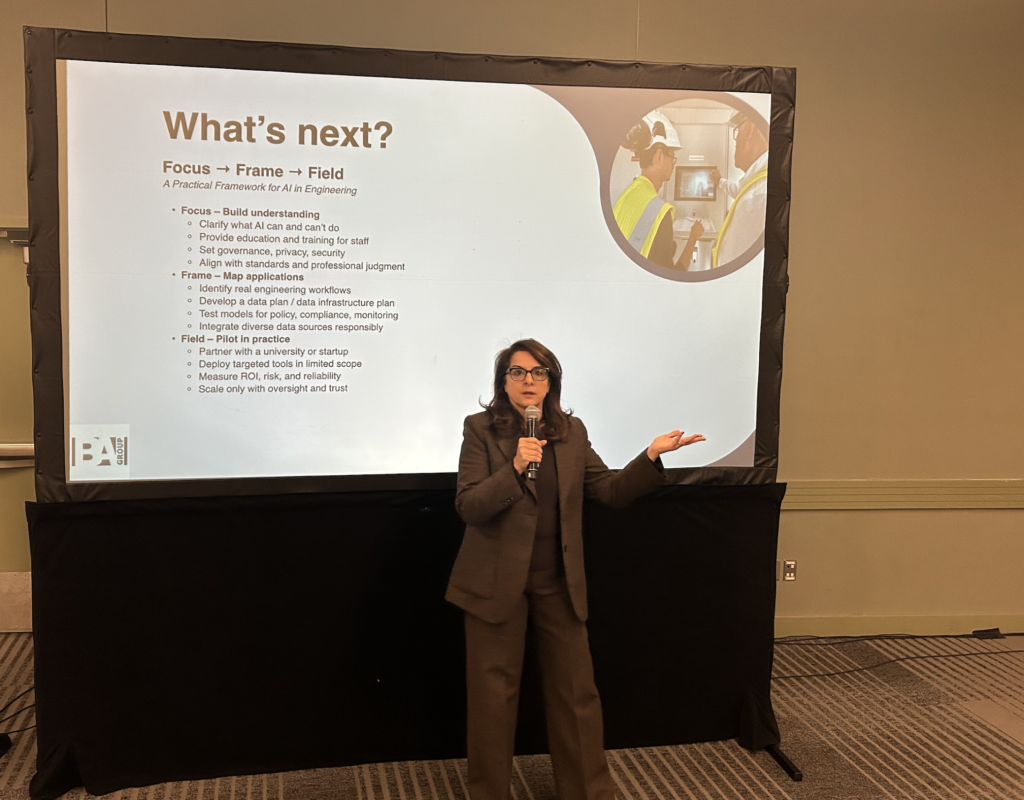
The discussions are practical. How sensors can surface landfill issues earlier. How to recognize groundwater trends before they escalate. How environmental systems might be understood over years, not just reporting cycles. And how, at scale, these insights can be organized into a living knowledge archive that helps utilities, operators, and engineers learn from past conditions rather than starting from scratch each time
Internally, BAI is also beginning to look at its own data differently. Not to automate engineering decisions, but to better understand how systems behave over time. This increasingly means less time buried in disconnected spreadsheets and more time learning how infrastructure actually responds in the real world.
Experience Still Leads
While new tools open new possibilities, Jim remains grounded in what has always mattered.
BAI’s geologists and environmental scientists stay focused on emerging concerns. Micro-contaminants. Long-term groundwater quality. Land reuse challenges. Their work is steady and methodical, built on continuous learning and formal training when needed.
BAI’s experience in brownfields stretches back to the passage of Pennsylvania’s Act 2 legislation. That history informs how the firm approaches redevelopment today, including renewable energy projects on formerly industrial land.
“Our background in waste management and brownfields gives us a broader, more informed perspective on redevelopment.”
Waste management, construction and demolition, recycling, and beneficial reuse are deeply interconnected. Understanding those connections takes time. It also takes teams who have worked together long enough to recognize patterns and anticipate outcomes.
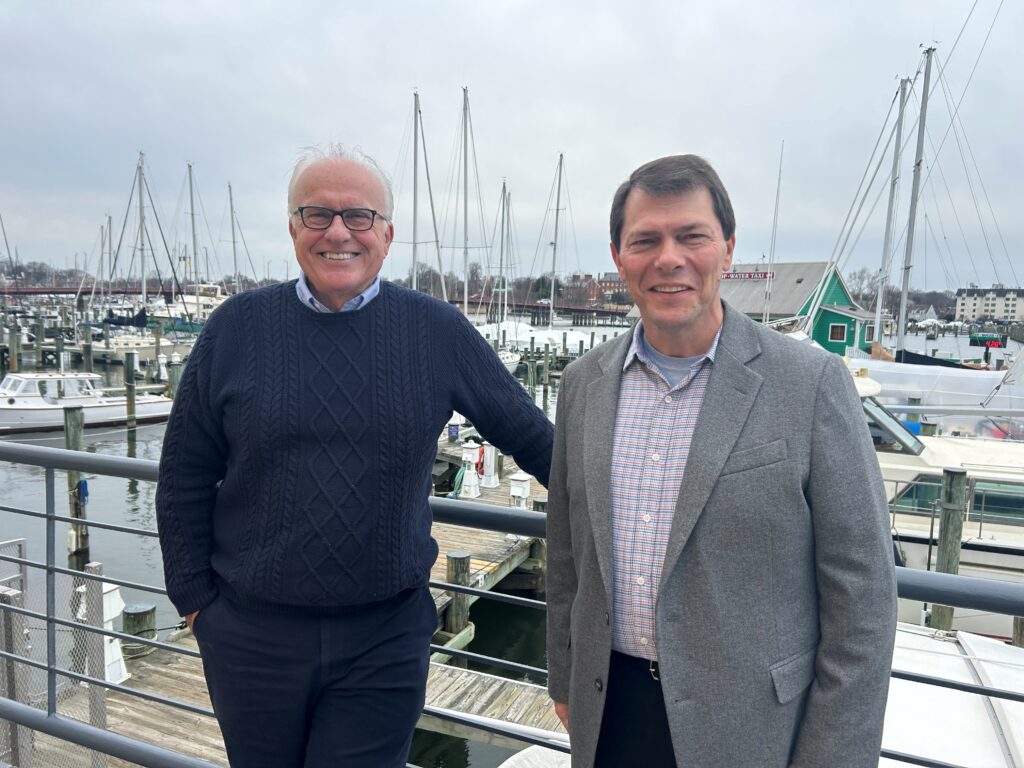
BAI Group’s Director of Operations
Arriving at BAI 4.0
In January 2026, this is BAI 4.0. A measured advance shaped by experience. One that creates space for the current and new generation of engineers, geologists, technicians, and administrative team members to learn differently, think differently, and build on what has already been proven.
Explorers do not rush forward. They observe the terrain. They prepare their tools. They move when the moment is right. Jim Echard has spent years assembling the pieces with his team. With a steady footing and a clear horizon, he is leading BAI forward.
Carefully. Thoughtfully. Prepared.