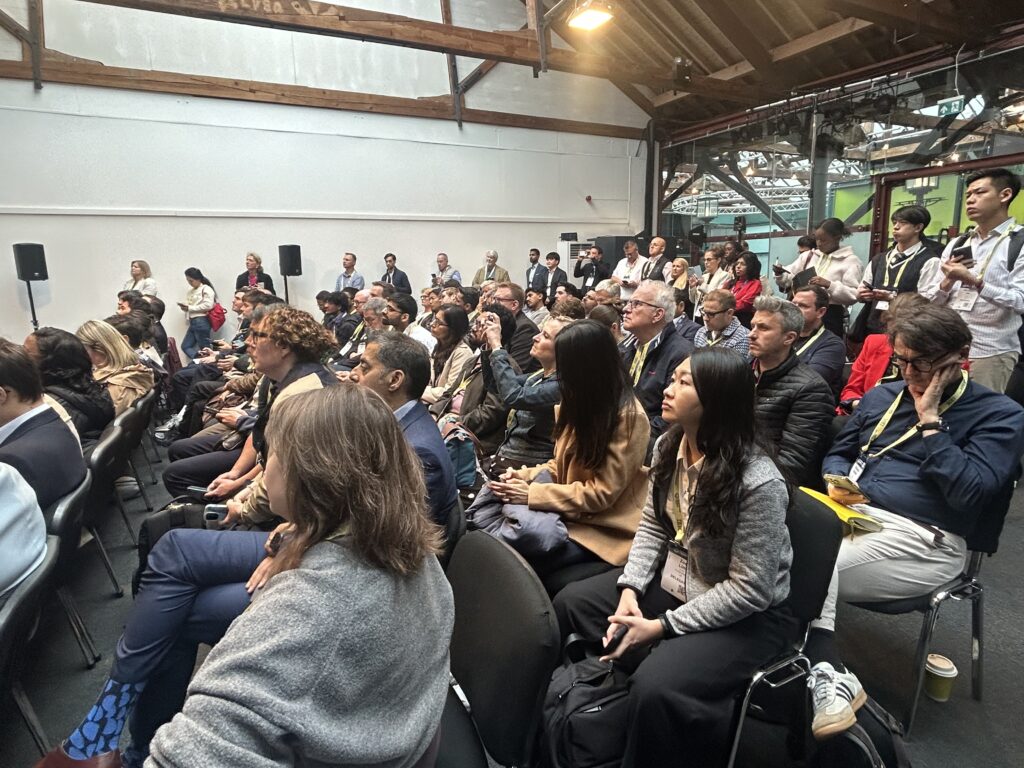
This week, BAI Group and bAI Labs joined global leaders, policymakers, researchers, and industry practitioners at London Tech Week and The AI Summit London 2026 to discuss one of the most important questions facing organizations today:
How do we move artificial intelligence from experimentation to practical, responsible deployment?
For BAI Group, the answer lies where it always has: solving real-world problems.
As a civil and environmental engineering firm with four decades of experience designing, permitting, building, and managing infrastructure, we approached London not as a technology company searching for applications, but as engineers exploring how emerging technologies can improve environmental stewardship, infrastructure resilience, operational efficiency, and public service.
Our team participated in several ways throughout the week. BAI Group President James B. Echard, P.E., joined a fireside discussion examining what infrastructure industries can learn from sectors such as aerospace, manufacturing, and energy that have spent decades integrating advanced technologies into mission-critical operations. Davar Ardalan, co-Founder of bAI Labs served as Chair of the newly launched Applied AI Track at The AI Summit.


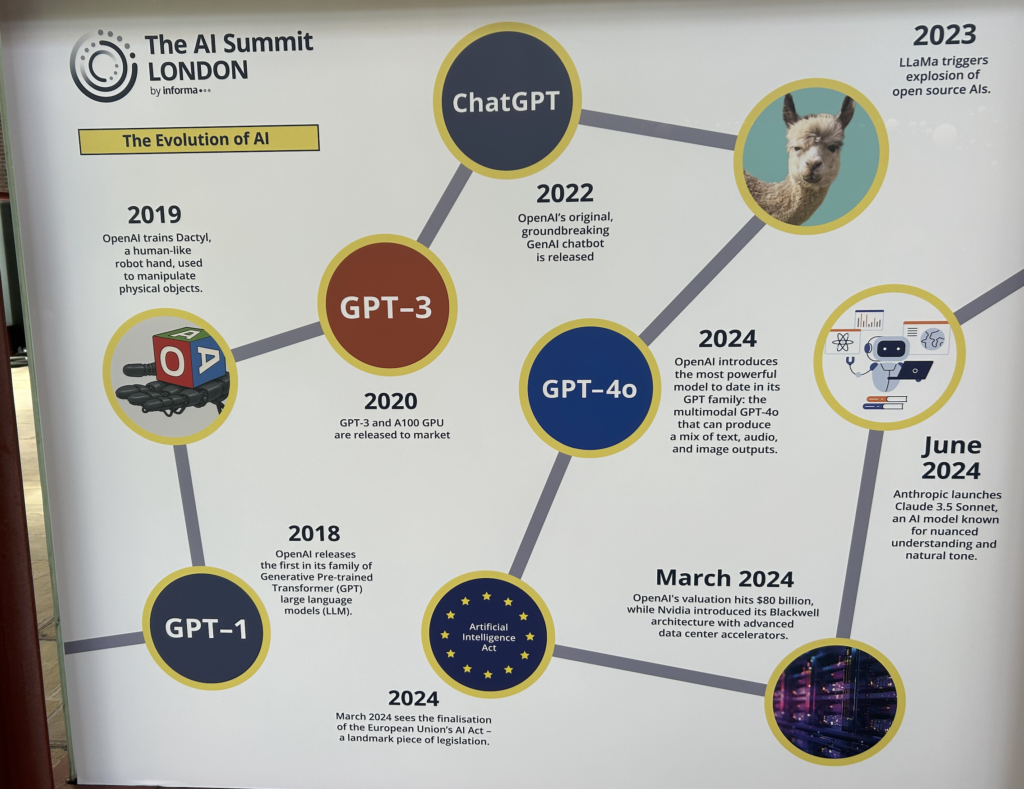
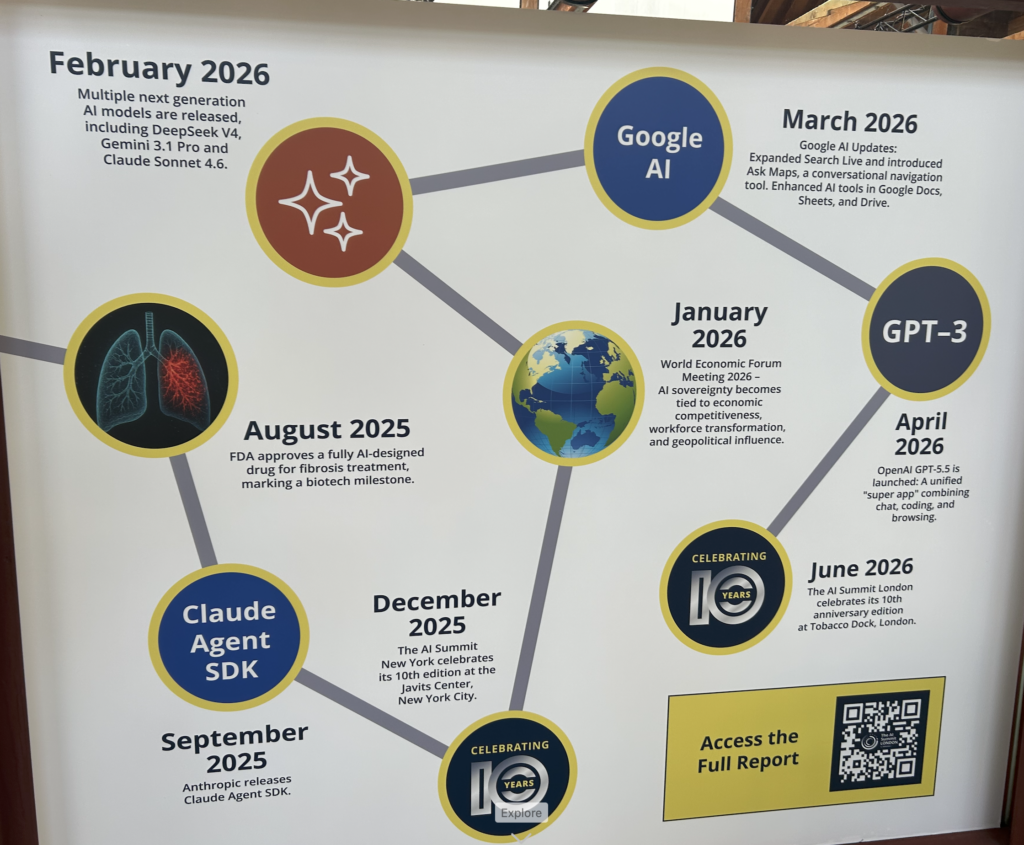
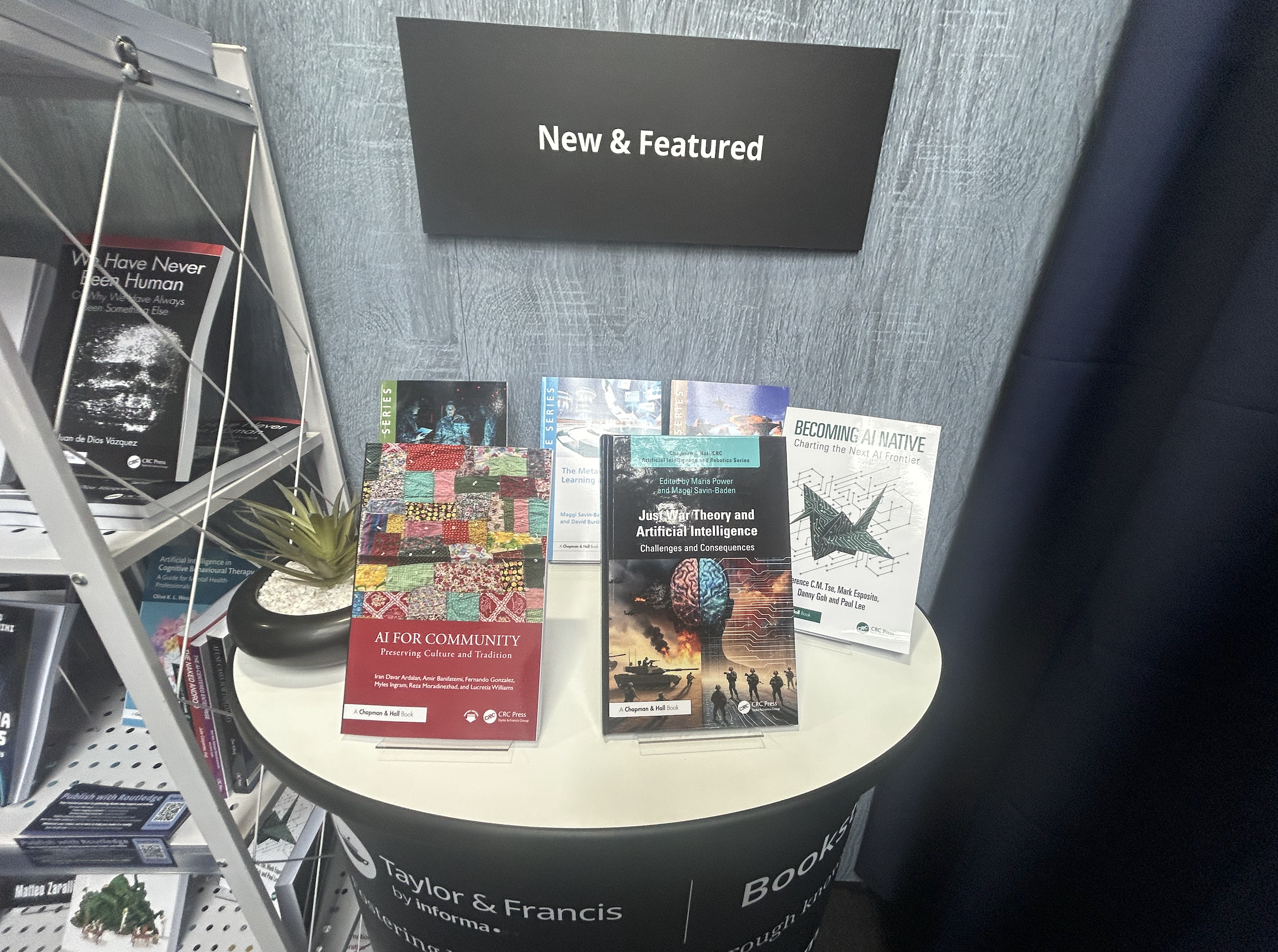
At the same time, John Oliver Smith, P.E., BCEE, Director of Operations at BAI Group and co-Founder of bAI Labs, participated in a Meet the Author session at the Taylor & Francis bookstand, discussing research from the forthcoming book Smart Water: The Future of Infrastructure and Artificial Intelligence. The project explores how engineering judgment, governance, data systems, and artificial intelligence can work together to support more resilient water and environmental infrastructure.
Together, these conversations reflected a common theme that would emerge throughout the week:
Successful AI adoption is not primarily a technology challenge. It is a challenge of readiness, trust, governance, and people.
Technology in Service of Communities
One of the most powerful messages of London Tech Week came from Prince William, who called on the technology sector to play a larger role in addressing homelessness through his Homewards initiative. Speaking about the potential of data and artificial intelligence to improve services and identify solutions, he described these technologies as potentially “game-changing” when applied to real societal challenges. The message resonated across the week.
Whether the challenge is homelessness, aging infrastructure, environmental compliance, methane emissions, water quality, or energy affordability, technology creates value only when it helps people make better decisions and achieve better outcomes.
Technology matters most when it serves people.
Beyond the Hype
Across The AI Summit, speakers repeatedly challenged organizations to move beyond AI hype and focus on practical implementation. One speaker urged businesses to “get off the ChatGPT bandwagon,” emphasizing that sustainable value comes from solving real business problems rather than simply adopting the latest tools.
Another memorable observation captured the pace of change: “AI is no longer a game of chess; it’s a game of squash.”
The point was clear. Organizations can no longer rely on static strategies. They must continually learn, adapt, and respond as technologies evolve. Despite representing different industries and sectors, speakers consistently returned to the same priorities:
- Build strong data foundations
- Invest in workforce development and AI literacy
- Establish governance before scaling
- Identify business-driven use cases
- Run pilots
- Learn from results
- Maintain human accountability
For infrastructure organizations, these lessons are particularly relevant. Critical systems demand reliability, transparency, and trust. The path forward is not about replacing expertise. It is about enhancing it.
What BAI Brought to the Conversation
During the fireside discussion, Jim Echard and Davar Ardalan shared examples of how BAI and bAI Labs are exploring practical AI applications within environmental and infrastructure systems.
One example involves a real-time methane monitoring pilot at a landfill. Environmental monitoring systems generate large volumes of information, but dashboards alone do not always provide actionable insight. By incorporating an AI explainer layer, operators can interact directly with environmental data through natural language, helping them identify trends, understand anomalies, and respond more effectively.
The team also discussed a digital twin of a wastewater treatment facility paired with an AI explainer interface. The goal is to help make complex operational information easier to understand while keeping experienced professionals firmly in control.
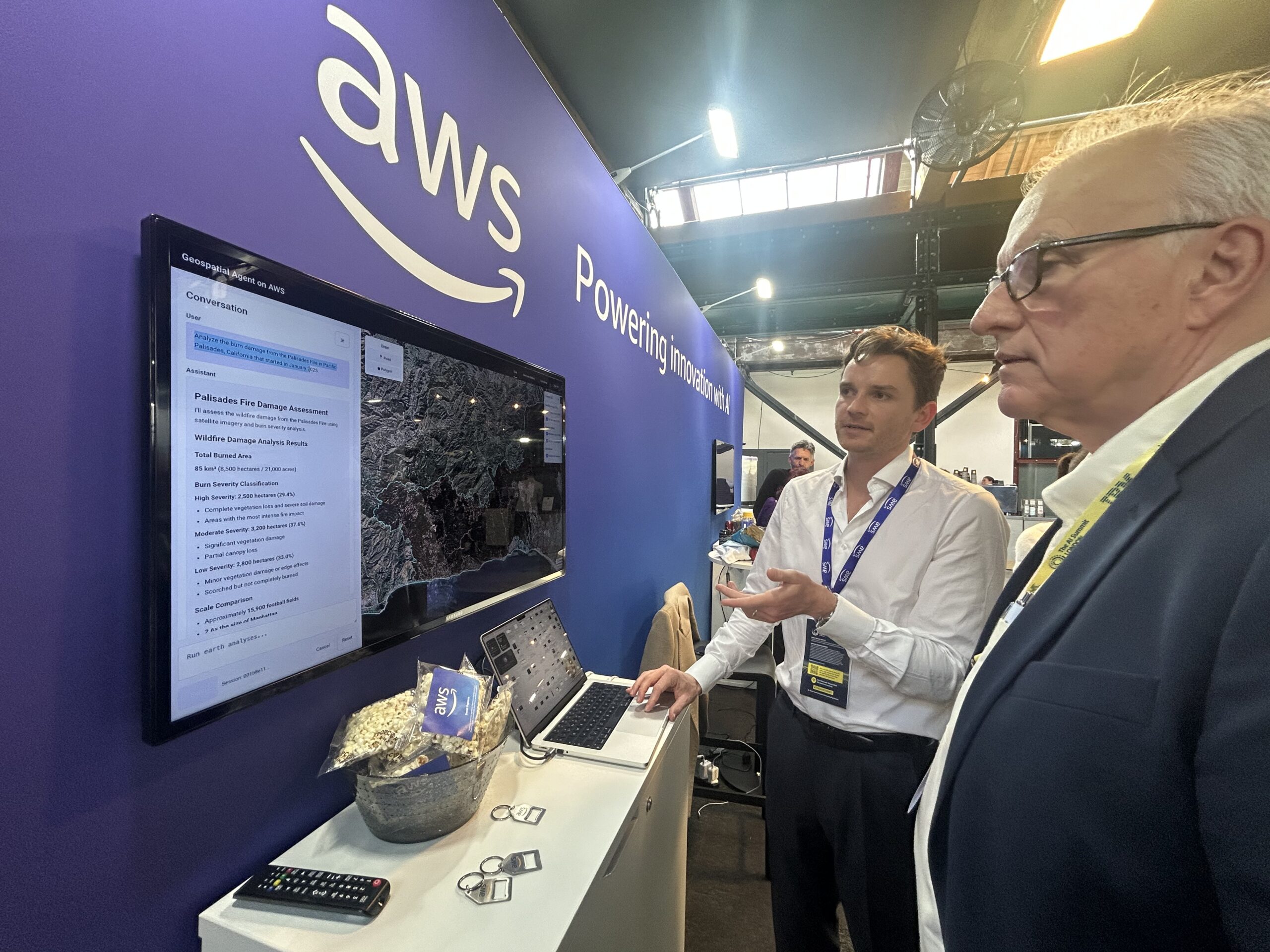
Looking ahead, BAI is also participating in discussions around GeoAI and infrastructure resilience through work connected to the Allen Institute for AI’s OLMoEarth initiative. These efforts explore how geospatial foundation models may eventually help support environmental stewardship, infrastructure planning, and long-term resilience.
A recurring theme throughout the conversation was the importance of preserving institutional knowledge.
Across infrastructure industries, organizations face a growing challenge as experienced professionals retire and decades of practical expertise risk being lost. Through its Field Intelligence initiatives, bAI Labs is exploring ways to preserve and organize expert knowledge while maintaining the central role of human judgment.
The goal is not to replace expertise. The goal is to make hard-earned expertise more accessible to future generations.
Test It in the Dirt
One theme from BAI’s fireside discussion generated significant interest among attendees. Drawing lessons from aerospace, manufacturing, and energy, Jim Echard emphasized that meaningful innovation does not happen solely in laboratories or conference rooms. It must be tested in real operating environments.
“Test it in the dirt.”
Every landfill, wastewater treatment plant, transfer station, solar facility, and public works operation presents unique conditions. Infrastructure systems operate under real constraints involving weather, regulations, budgets, workforce limitations, and public accountability.
AI solutions must prove themselves under those conditions. The future of infrastructure AI will be built in the field, alongside engineers, operators, utilities, municipalities, and communities.
Physical AI Is Closer Than Many Realize
Another significant discussion centered on robotics and physical AI.
Richard Ahlfeld of CoreWeave argued that advances in large language models have dramatically improved the ability of robots to understand instructions, reason through tasks, and interact with people.
Yet he noted that the industry’s biggest challenges are increasingly related to infrastructure rather than AI itself. Access to computing resources, connectivity, battery technology, edge computing, and high-quality training data remain major barriers.
His prediction was striking. Advanced robots that cost hundreds of thousands of dollars today could become dramatically more affordable within the next several years.
For infrastructure organizations, this raises an important question:
How should we prepare today for technologies that may become operationally practical tomorrow?
The answer, once again, begins with readiness, data, governance, workforce training, and operational understanding.
Governance Is an Engineering Discipline
One of the strongest governance messages of the summit came from Rebecca Gallagher of Weir. Her observation was simple:
“You can’t govern what you can’t see.”
She argued that organizations need visibility into all AI systems being used across the enterprise, from productivity tools to advanced operational platforms. Equally important, she emphasized that AI governance cannot belong solely to IT departments. AI risk is enterprise risk.
That perspective aligns closely with BAI’s Five-Part AI Governance Framework, which emphasizes transparency, privacy, security, human oversight, accountability, and continuous learning. As engineers, we recognize that trust is earned through process, documentation, verification, and responsible implementation. The same principle applies to AI.
What We Brought Home from London
As London Tech Week concluded, one message stood above all others.
Organizations that succeed with AI will not necessarily be those with the newest tools or the largest models. They will be the organizations that build strong foundations: data, governance, workforce readiness, institutional knowledge, and trust.
For BAI Group, the experience reinforced the direction we are already pursuing through our engineering practice, renewable energy work, environmental services, and applied AI initiatives.
The future of infrastructure will continue to rely on concrete, steel, pumps, pipes, treatment systems, landfills, energy systems, and the people who operate them. Artificial intelligence is becoming another tool available to those professionals, but only when deployed responsibly, transparently, and with a clear understanding of the problems it is intended to solve.
The global conversation taking place in London was encouraging because it reflected what many infrastructure leaders already know:
Technology matters. People matter more. And the best innovations are the ones that prove themselves in the real world.
This post was prepared with our BAI AI assistance under human review.