As energy costs rise and grid constraints become more common, battery energy storage is emerging as one of the most practical tools organizations can use to improve resilience, efficiency, and cost control. From municipalities and transit agencies to schools, utilities, and private businesses, batteries are no longer just an add-on to solar power — they are increasingly viewed as essential infrastructure for managing power availability and reliability.
That shift is reflected in a recent national survey by Foley & Lardner, which found that roughly half of industry stakeholders now see energy availability and redundancy as the single greatest obstacle to new infrastructure development—both today and through 2030. The same survey identified renewables supported by battery storage as a core part of the “ideal” future energy mix.
At BAI Group, battery resiliency is never a one-size-fits-all solution. Each system is evaluated and engineered around a client’s operational needs, risk tolerance, regulatory environment, and long-term objectives.
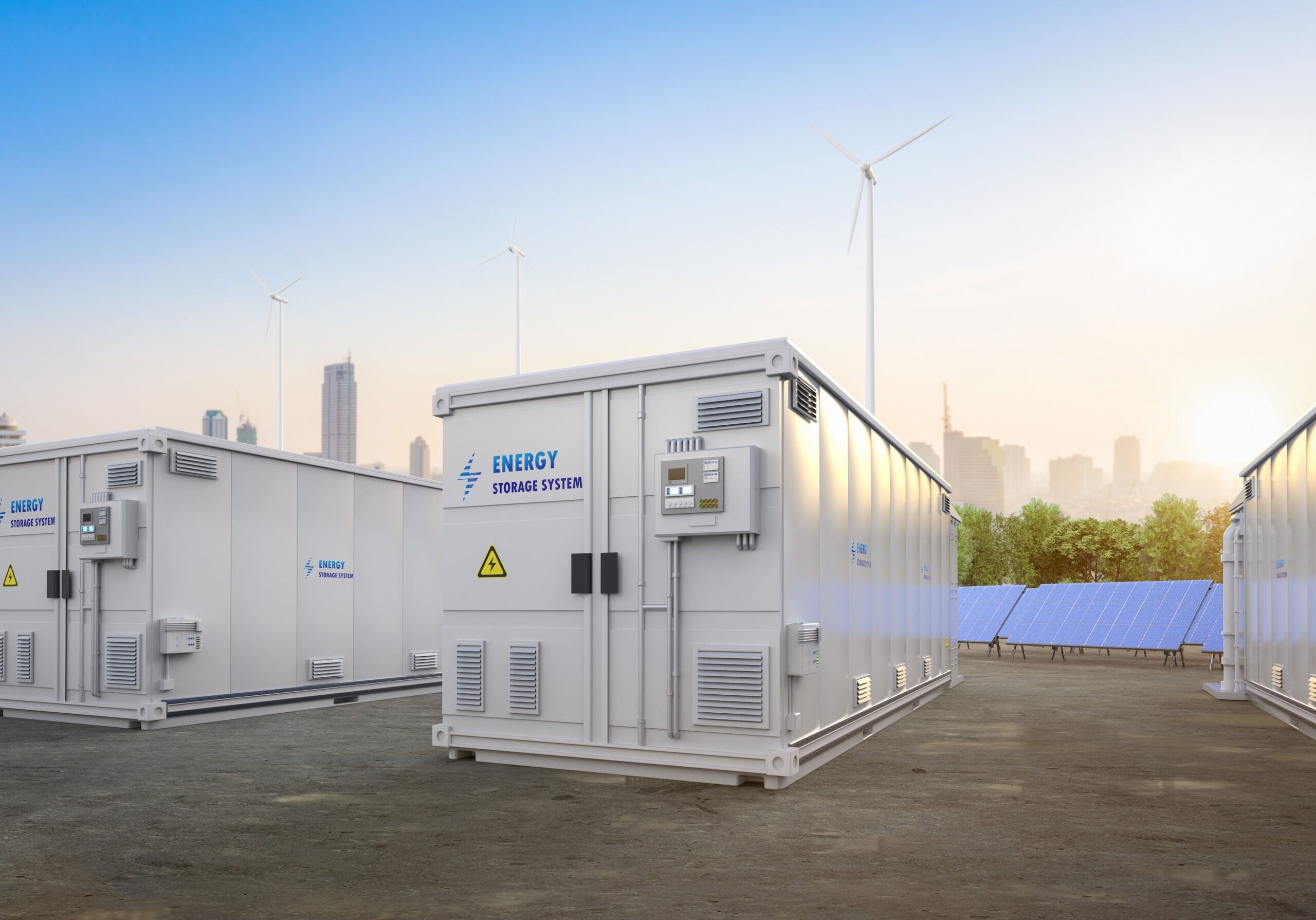
What Is Battery Resiliency?
Battery resiliency refers to the use of battery energy storage systems (BESS) to support facilities during grid stress, power constraints, outages, or peak demand periods. When properly designed, battery systems can:
- Reduce peak demand charges through peak shaving
- Provide short- or longer-duration backup power
- Improve power quality and voltage stability
- Support selected critical operations during outages
- Supplement constrained utility service or delayed grid upgrades
- Integrate with solar, generators, or microgrids
As Jim Echard, President of BAI Group, explains:
“We can deliver batteries from large to small, depending upon the client’s objectives. Whether it’s peak shaving, emergency backup, or power quality smoothing, each design is different and requires a review of real meter data to determine the right size.”
A Practical, Phased Approach
For many organizations, battery resiliency starts with a specific operational need rather than a full-scale system. John Oliver Smith, who leads BAI Group’s Maryland operations, notes:
“We’re seeing growing interest in batteries as part of a broader resilience strategy. The first step is understanding how a battery supports a specific operation or critical function — and starting at a scale that makes sense.”
Flexible Ownership and Financing
Battery projects can be delivered through traditional EPC models or no-upfront-cost structures such as Energy Service Agreements (ESAs), allowing organizations to move forward without delaying projects due to capital constraints or evolving utility timelines.
Real-World Value, Today and Tomorrow
Battery energy storage is a proven, deployable solution that helps organizations reduce exposure to outages, manage grid limitations, improve cost predictability, support electrification, and advance sustainability goals.
As Sel Edor, General Manager of Renewables at BAI Group, puts it:
“For many organizations, battery storage starts with a conversation — not a commitment. Our role is to help clients understand what’s practical today, while keeping an eye on future needs.”
Battery resiliency is about engineering practical systems that perform when they are needed most.
This blog was prepared with AI assistance under human review.