Davar Ardalan
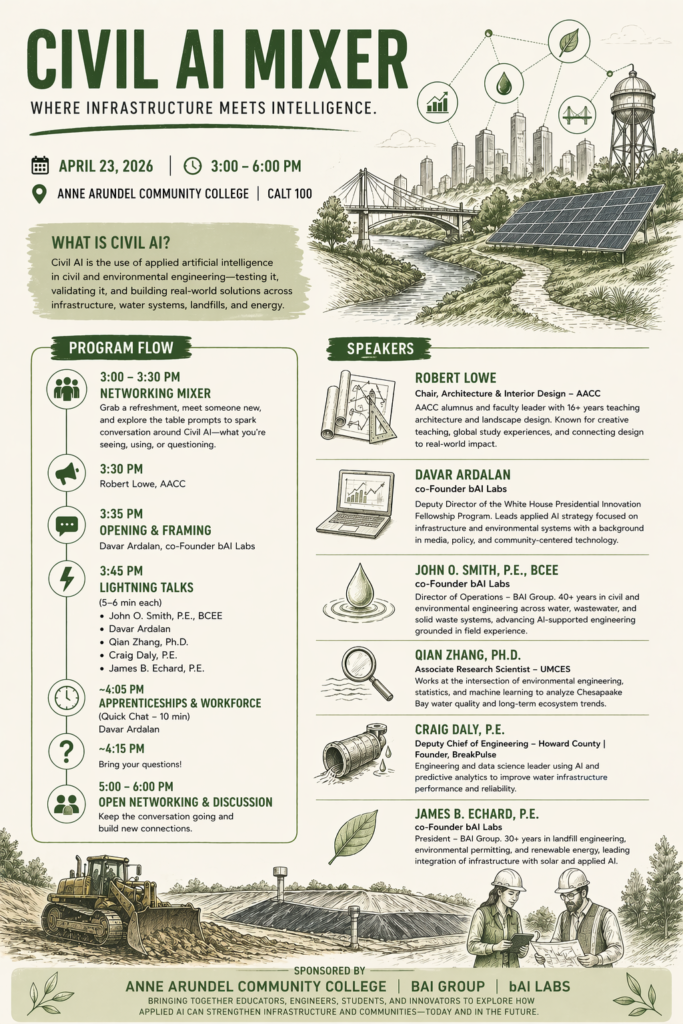
Civil AI is not abstract. It is applied. It lives in the process of testing, verifying, and validating systems in real-world conditions. It means building tools that work not in ideal environments, but in the dirt, in landfills, in water systems, and in places where data is incomplete, and conditions are unpredictable. It is not just about models. It is about whether those models hold up in the field, under pressure, and over time.
That was the conversation we brought to Anne Arundel Community College.
This event marked the first public gathering for bAI Labs, our applied AI initiative based in downtown Annapolis. Co-hosted with Rob Lowe, Chair of Architecture at AACC, the mixer brought together BAI Group, bAI Labs, and a diverse group of educators, students, engineers, business leaders, and regional stakeholders. The goal was not to present AI as finished or fully formed, but to open a practical and grounded discussion about AI readiness and the future of infrastructure.
There was a shared sense that this moment is still early.
Civil AI is not yet a course. Not yet a credential. Not yet a job title. That is precisely why it matters now. It is still being shaped by the people who will teach it, apply it, and build with it. At bAI Labs, our focus is on that early stage: AI readiness, hands-on workshops, and pilot projects that bring these tools into real use. I shared this perspective through my own journey, from National Geographic and NPR to the White House Presidential Innovation Fellowship, emphasizing a clear need. Organizations require new frameworks for how data is shared, understood, and applied.
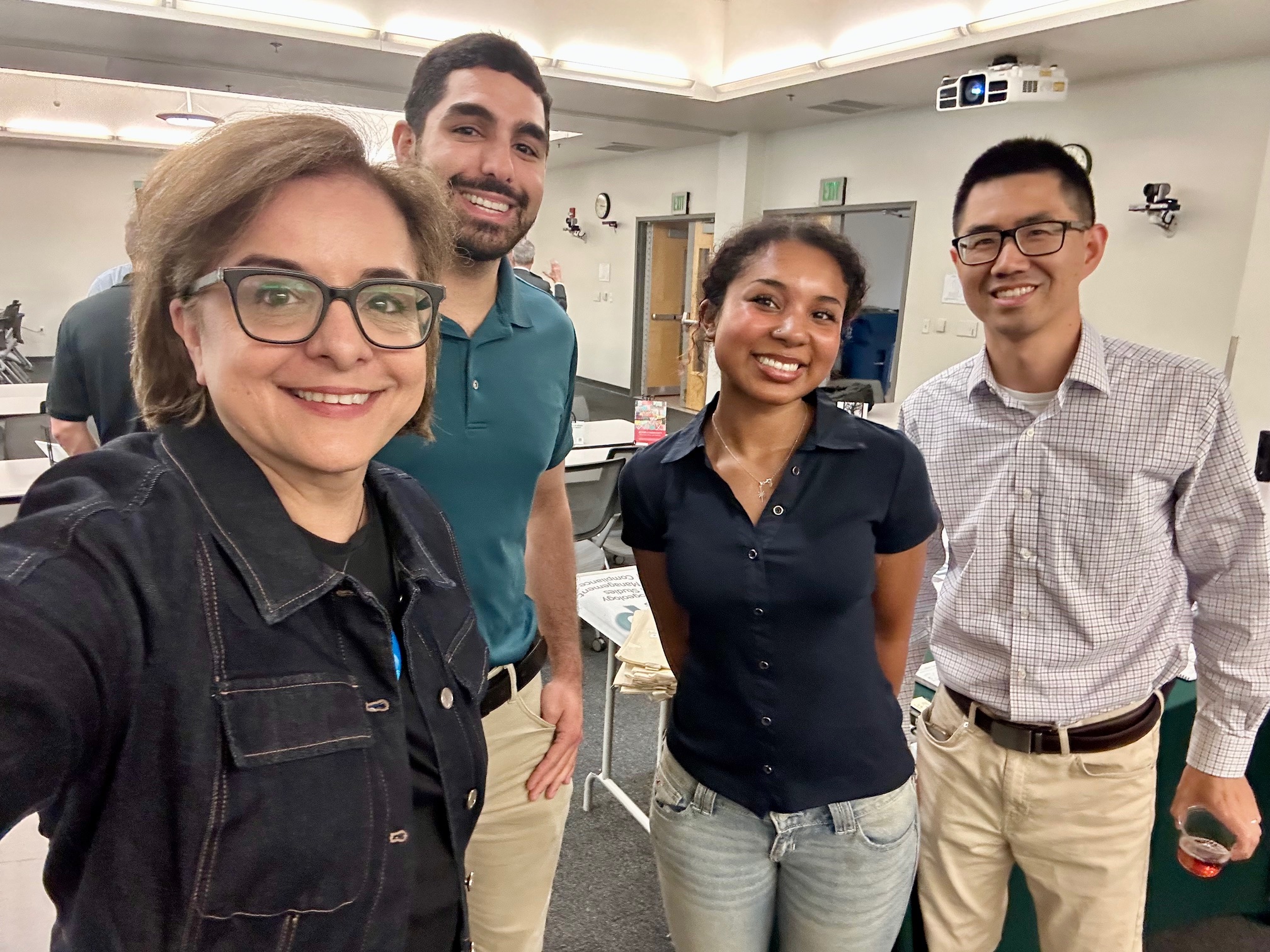
Over the course of two hours, the room stayed in motion. People came, listened, asked questions, and engaged. Among them were respected engineers like Gian Cossa, formerly of DC Water, and Al Roman of Roman Consulting, a recognized landfill expert. Representatives from Anne Arundel County and Maryland Commerce also joined later, adding a public sector perspective to the discussion.
What stood out most was the tone: thoughtful skepticism.
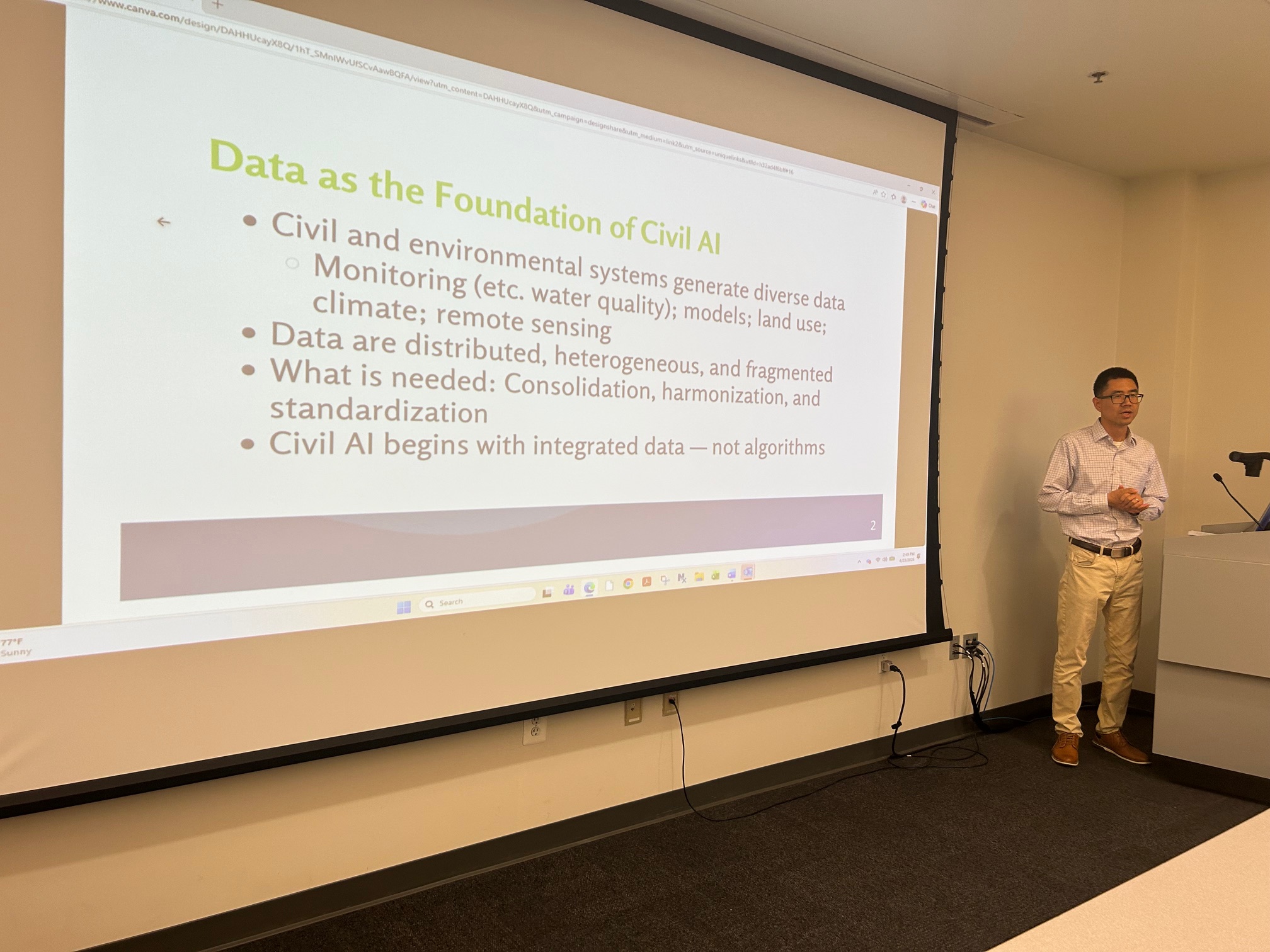
Educators emphasized the importance of fundamentals before students are permitted to use AI. Engineers asked direct and necessary questions. What happens when the data is wrong? What happens in difficult field conditions? Who is accountable? It reflected the standards that define civil and environmental engineering. Craig Daly spoke to system performance in water infrastructure, while Qian Zhang demonstrated how AI can reveal patterns in complex environmental systems like the Chesapeake Bay.
The conversation stayed grounded because it was anchored in experience.
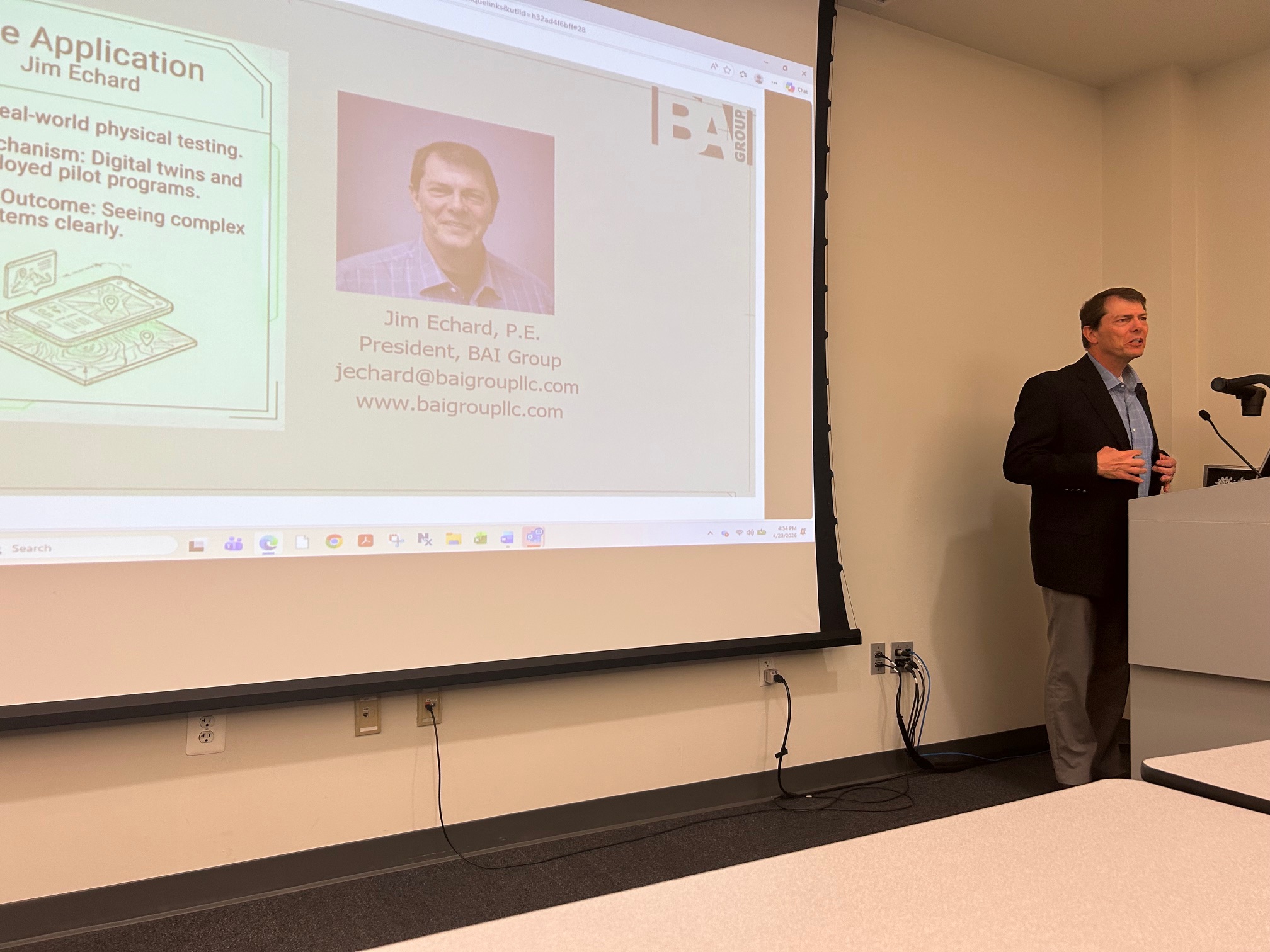
Jim Echard, President of BAI Group and co-founder of bAI Labs, brought decades of leadership in solid waste and environmental engineering, supporting and advancing these early AI pilots. John Oliver Smith added deep, field-tested expertise across water, wastewater, and environmental systems. Together, they demonstrated how bAI Labs is beginning to test AI in landfill monitoring, geospatial analysis, wastewater modeling, and field operations. In many ways, Smith served as a connecting thread across the room, a veteran engineer who has worked alongside many present, bridging relationships and reinforcing trust in this emerging space. The most important shift came after the formal talks ended.
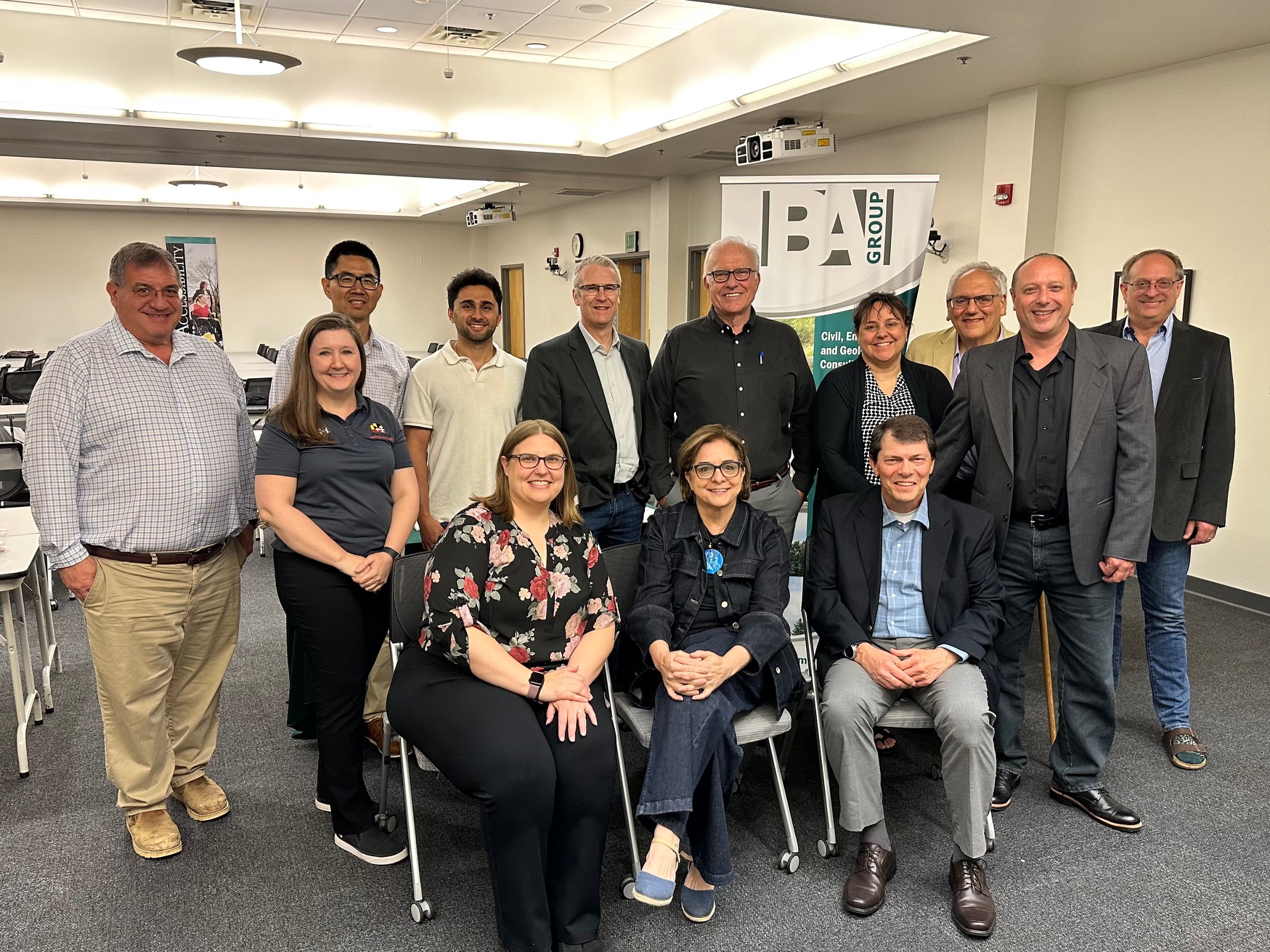
The room reorganized into a small group. Conversations became more open and more specific. Students spoke with engineers. Educators exchanged ideas with practitioners. People shared real challenges, including data limitations, operational constraints, workforce readiness, and explored where AI could realistically support fieldwork. The discussion was practical, honest, and grounded. This is where Civil AI begins to take shape.
For bAI Labs, this event was just the starting point.
From our base in downtown Annapolis, we are continuing to work with businesses, educators, municipalities, and community partners. The goal is simple: make AI practical, make it responsible, and make it useful. Civil AI will not be defined by technology alone. It will be built through testing, training, and collaboration, long before it becomes standard practice.
For our part at bAI Labs, we highlighted how we are testing AI applications across landfill monitoring, geospatial analysis, wastewater modeling, and field operations. We’re working to understand the value of AI in infrastructure and the practical, human-centered approach to integrating AI into real-world infrastructure.